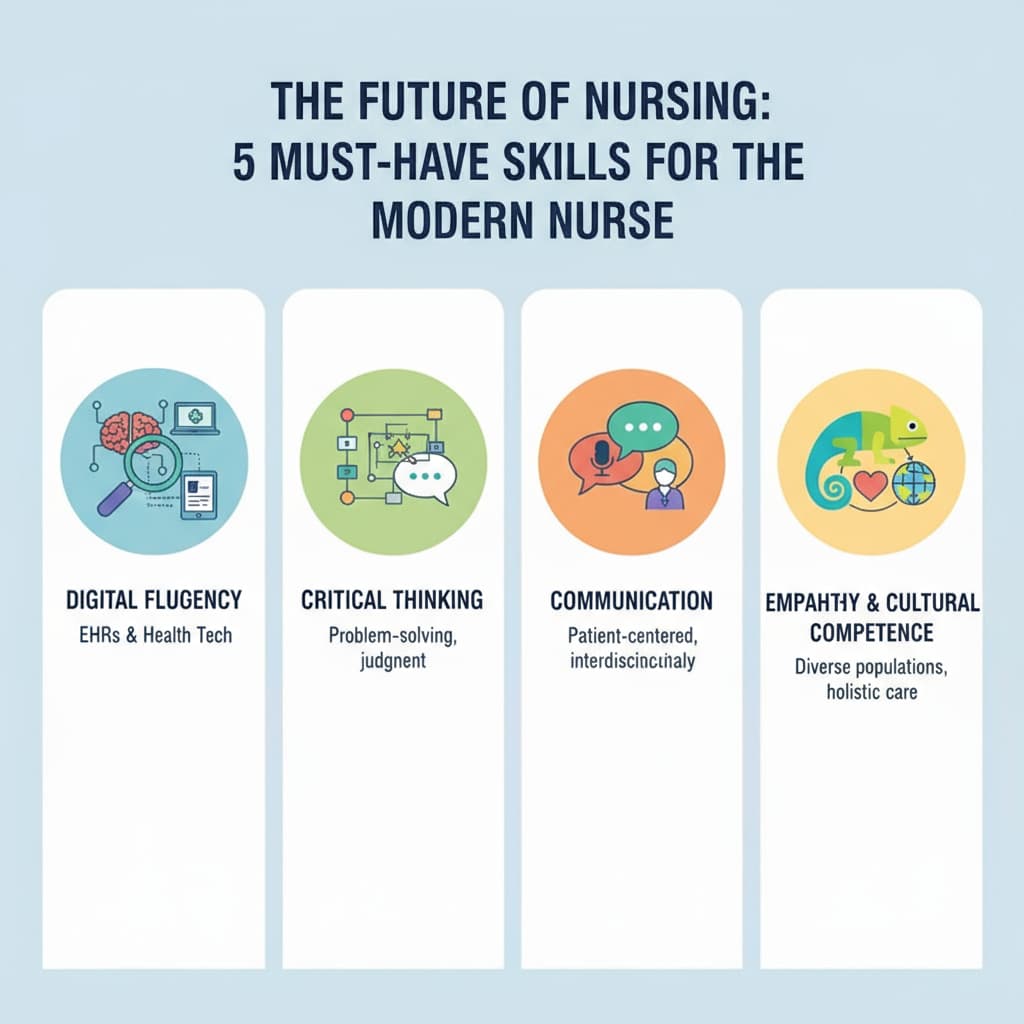
The nursing profession is evolving. The modern nurse is not only a compassionate caregiver but also a tech-savvy problem-solver and a lifelong learner. While clinical skills are fundamental, these “soft” and technological skills will set you apart.
Technological Competence: Proficiency with EHR systems is now standard, but nurses are also increasingly using telemedicine platforms, remote monitoring devices, and smart pumps. Stay updated on the latest healthcare tech to remain a competitive candidate.
Emotional Intelligence (EI): The ability to understand and manage your own emotions and to recognize the emotions of others is crucial. High EI helps you communicate more effectively with patients, families, and colleagues, especially in stressful situations.
Adaptability: Healthcare is constantly changing. New treatments, protocols, and technologies are introduced every day. A modern nurse must be adaptable, open to new ways of doing things, and willing to learn.
Interprofessional Collaboration: Modern healthcare is a team sport. Nurses work closely with doctors, physical therapists, pharmacists, and social workers. The ability to communicate and collaborate effectively is key to providing holistic patient care.
Patient Advocacy: A nurse’s role as a patient advocate is more important than ever. This skill involves not just speaking up for your patient’s best interests but also understanding their rights and helping them navigate the complex healthcare system.
Embracing these skills will not only make you a better nurse but also a more sought-after professional.
Before telehealth clinic, I set custom alert ranges in our remote monitoring dashboard for my CHF and COPD patients; it reduced false alarms and helped me catch a 4-lb overnight gain early. Also, a simple smartphrase for video consent and home safety check shaved a few minutes off every note.
On our unit I made a quick SBAR smartphrase that auto-pulls last vitals, 24‑hr weight change, and active meds; it shaved a couple minutes off each handoff and killed the “wait, what’s their O2?” scramble. @river_orbit6128 your alert ranges are clutch — I also color‑code CHF/COPD watchlists so overnight weight or sat bumps jump out; boring hack, big payoff.
Quick tip: I saved an EHR view that highlights new critical labs and 24‑hr deltas for my assigned patients, so during rounds I see “what changed” first and call providers with the top two items. @heron your point on streamlined handoff reminded me how much this cut the back‑and‑forth; small caveat — make sure those flags don’t duplicate the lab’s pager alerts. It’s like checking a weather radar instead of sticking your hand out the window.