The Intensive Care Unit (ICU) is a high-stakes, fast-paced, and highly rewarding environment. It’s also one of the most competitive nursing specialties to get into. If you dream of working in the ICU, here’s a roadmap to make it happen.
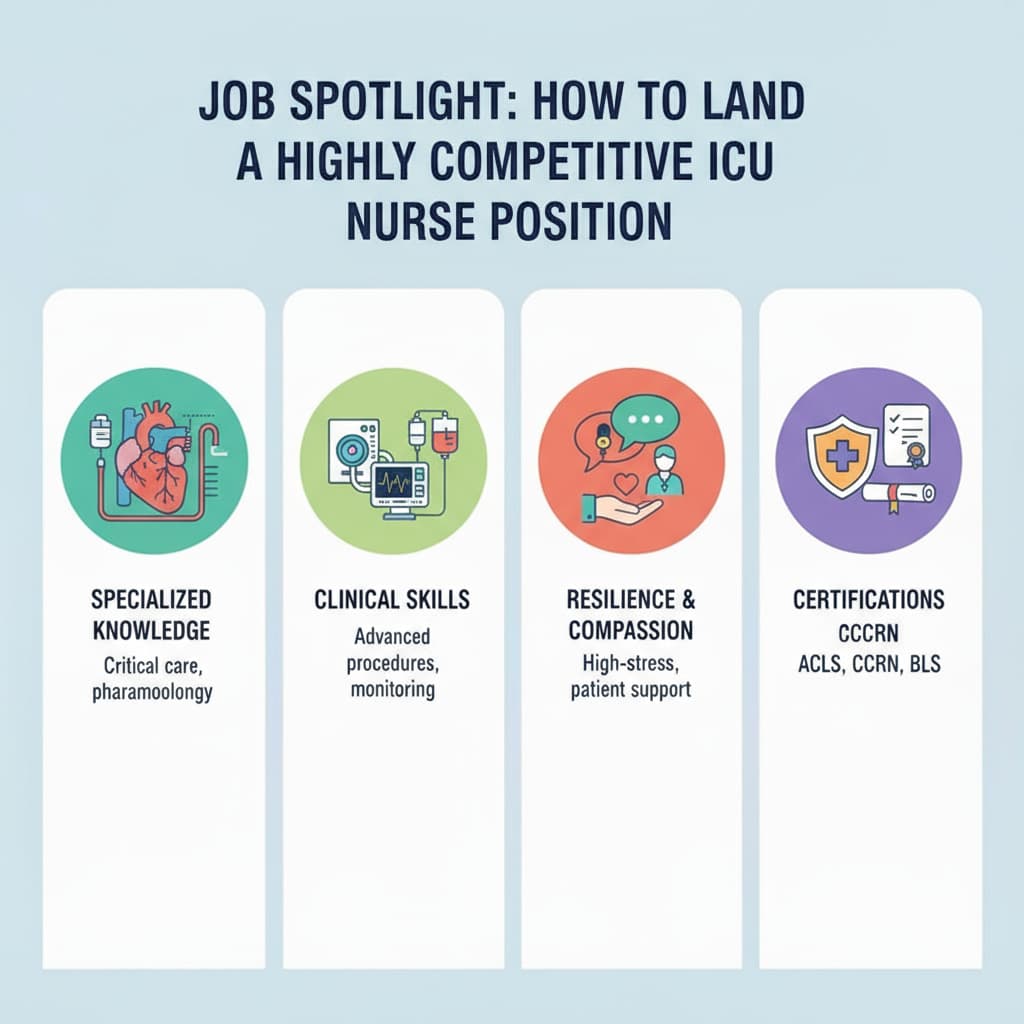
- Start in a Related Field: Very few new graduates get an ICU job right out of school. Start by gaining experience in a related specialty, such as a Medical-Surgical (Med-Surg) unit or a Step-Down unit. This experience will provide you with a solid foundation in managing patient care and developing your clinical judgment.
- Earn Relevant Certifications: Certifications show a commitment to your professional development and a deep understanding of critical care. The ACLS (Advanced Cardiac Life Support) and PALS (Pediatric Advanced Life Support) certifications are a must-have.
- Show Your Passion and Knowledge: In your interview, don’t just say you want to work in the ICU. Show that you understand the demands of the job and that you’re passionate about critical care. Mention your certifications, relevant experience, and desire to learn and grow.
- Network with Current ICU Nurses: Talk to nurses who already work in the ICU. They can offer invaluable insights, advice, and may even be able to refer you for a position. Go to a career fair or a professional networking event.
- Be Patient: The path to the ICU is a marathon, not a sprint. It may take a year or two of hard work and gaining experience on a different floor. Use that time to strengthen your skills, build your resume, and prove your dedication.
With the right preparation and persistence, you can achieve your goal of working in the ICU.